Welcome & thanks
for your interest in our work!
We are a young group based at the Research Institute of Wildlife Ecology (University of Veterinary Medicine Vienna) in Vienna, Austria. We are interested in investigating the physiological mechanisms of energy homeostasis underpinning variation in life-history strategies of vertebrates. Currently, we study this fundamental research topic within the contemporary era of the Anthropocene. To tackle our research questions, we integrate tools and methods from molecular physiology, neuroendocrinology, redox biology, and physiological energetics. Thanks to a fantastic network of collaborators in Vienna and abroad, we strive to combine experiments both in the lab and in wild settings.
With our research we aim to contribute to a greater and deeper understanding of how animals adapt or perish as our planet becomes warmer, more populated, and resources scarcer and less predictable, ultimately linking basic research within the broader One Health framework.
Research Institute of Wildlife Ecology
Department of Interdisciplinary Life Sciences,
University of Veterinary Medicine Vienna
Savoyenstraße 1a, A-1160
Vienna, Austria
Valeria Marasco, team leader (PI)
Research interests
My research interests lay at the interface between physiology, ecology, and evolution. I broadly seek to investigate the proximate factors underpinning variation in the life history of animals, from conception to death, and especially at the species- and population-level. Topics of major interest currently cover mechanisms of physiological resilience and associated life-history trade-offs, the role of parental / early-life environments in influencing an organism´s phenotype and that of future generations, adaptations to extreme seasonal harshness and life-history strategies. To address these fundamental topics, I employ multidisciplinary approaches that integrate study of mechanisms and functions, in the laboratory and field settings, and that range from genes to molecules to the whole organism.
Short Bio

I was born and raised in Southern Italy, Calabria. I completed my high school studies at Liceo Scientifico “Giovanni Losardo”, Cetraro, in 2002. In parallel, I studied piano and obtained the Diploma (5th year) at the Music Conservatory “Stanislao Giacomantonio”, Cosenza. My passion for the study of wildlife and natural processes took over, and I decided to continue my studies at the University of Bologna (2003-2006) where I obtained the Bachelor’s degree in Natural Sciences. After that, I moved to the University of Firenze for my Master studies in Nature Conservation (2007-2009). I then moved to the UK, at the University of Glasgow, where I did my PhD studies under the supervision of Karen Spencer, Jane Robinson, and Pawel Herzyk. In 2013, I started my first postdoc at the University of Glasgow with Pat Monaghan, and in 2017 I moved to the Konrad Lorenz Institute of Ethology (University of Veterinary Medicine Vienna), in Vienna (Austria), to work with Leonida Fusani, first funded by a Marie Curie Fellowship (EU), and then by a Lise Meitner Followship (Austrian Science Funds FWF). Since October 2023, I am Assistant Professor in Ecophysiology at the Research Institute of Wildlife Ecology (University of Veterinary Medicine Vienna) and leading scientist of the Ecophysiology Group within the Research Institute.
A key component of academic life I enjoy very much is the interaction with students in lectures and tutorials (full lists of thought courses in the teaching page) but also “hands-on” on the lab bench for training in assays in the field of endocrinology and molecular physiology.
I knew I wanted to be a wildlife researcher since I was a child. Being part of academia as both a researcher and teacher is more than a job to me. It’s pure passion, it makes me feel fulfilled and I love the highs and lows that science often brings! In my free time, I enjoy spending time outdoors in nature, reading and listening to music. Sport, rock climbing and via ferrata are rare these days. I love going on play trips with my little daughter and our friends!
Current team
Clara Mendes Ferreira, Technical Assistant (TA)
My academic journey began in 2008 at University of Évora, Portugal, with a focus on conservation biology and ecology, with further specialization in population genetics during my master’s degree at University of Porto in 2011. During those years, I worked a lot with small mammals, helping study elusive rodent species through the use of non-invasive genetics. In 2018, I moved to Germany to do my PhD at the University of Potsdam in animal ecology. In 2024, I joined the team as a technical assistant, where I contribute to support with the the laboratory work.
On the side, my hobbies include drawing and making illustrations, birdwatching, participating in nerd conventions and playing cooperative games.
Anustup Bandyopadhyay, PhD Student
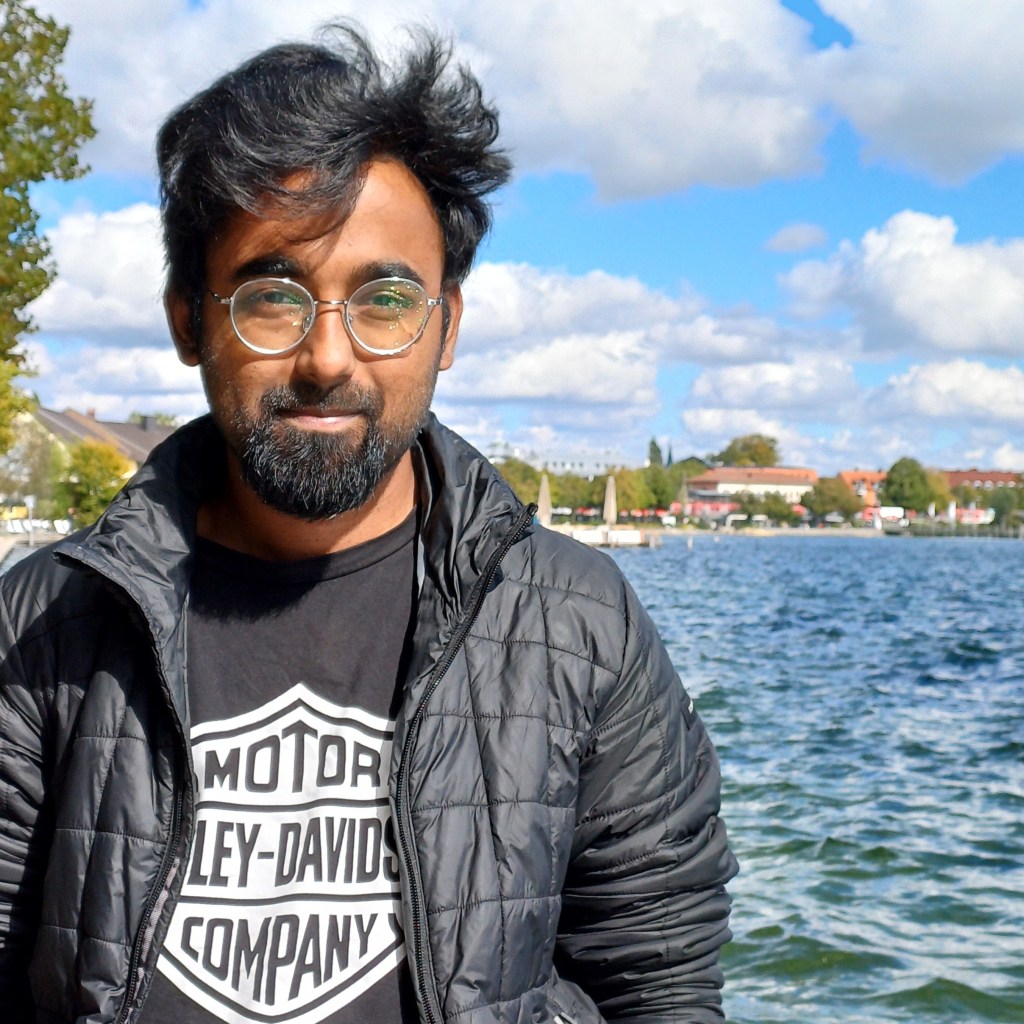
I hold an MSc from Ludwig Maximilians University of Munich. During my internship at the Max Planck Institute for Biological Intelligence in Munich, I worked on behavior, corticosterone, and mitochondrial metabolism in zebra finches. This experience stemmed my interest in physiology and behavior. Building on that, I spent a year at the Max Planck Institute for Evolutionary Biology in Plön, where I worked on reproductive tactics affecting physiology and cognition in house mice.
For my PhD, I joined the Marasco Lab in Vienna, where I will be studying whether and how parental foraging strategies influence the physiology and development of juvenile White Storks.
Former students
2023-2024: Pietro Semprebon
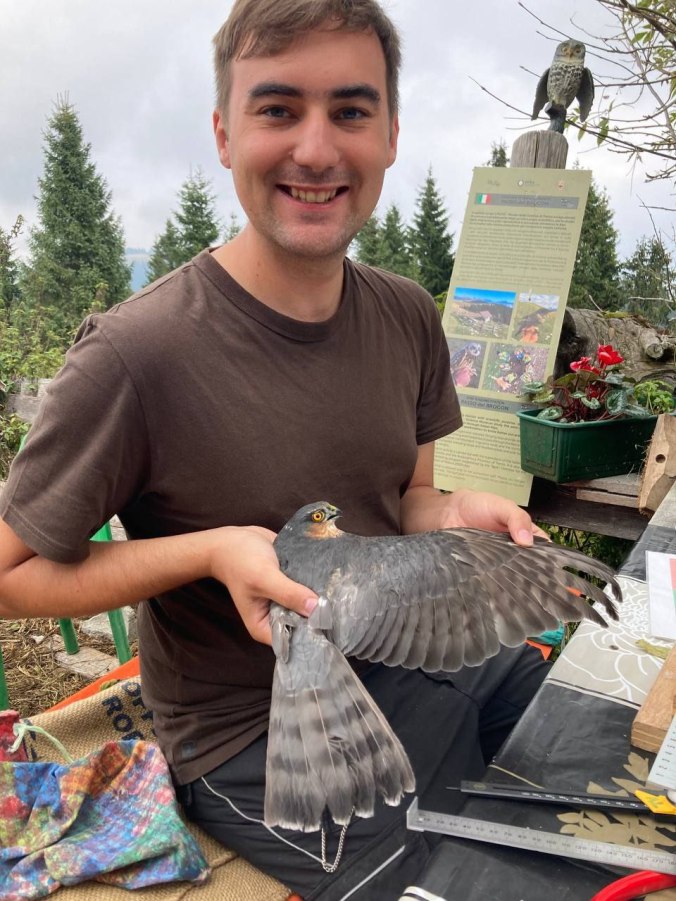
I started my academic journey in 2017 at University of Padova, in Italy, where I graduated with a master’s degree in Natural Sciences in 2022. During that period, I developed a deep interest in the avian world, deciding that it would have been my research field, fuelled by wonderful complexity of birds and an awareness of their vulnerability to environmental changes. As an aspiring ornithologist, my research interest is focused on behaviour and ecology of avian species, with a particular curiosity in understanding the movement of birds populations. For me, these are fundamental research topics for the conservation of avian species, and I think a complete understanding on the processes that regulate their behaviour, their environmental requirements, and their response to human activities is essential in improving the conservation effort and creating better protection guidelines. I have recently joined the team as a research intern. I am mostly working on lab experiments in quails to find out more about their physiological and energy turnovers across their life-history cycles.
After a short stop-over to join a research team at the Vogelwarte Sempach (Switzerland), Pietro has already moved into his PhD studies at the University of Coimbra (Portugal). Congratulations Pietro!
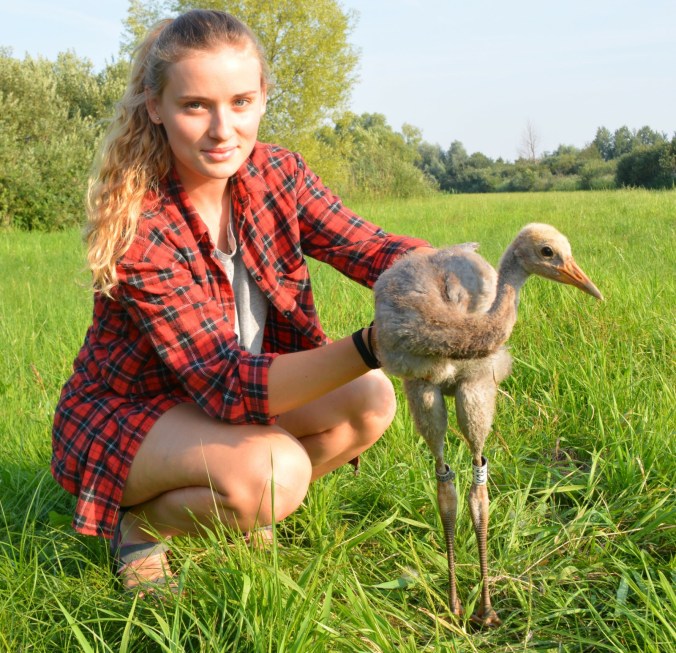
2020-2022: Zuzanna Zielińska,
Biology MSc student, Institute of Zoology, University of Life Sciences, Poznan, Poland.
Zuzanna is currently employed as lab technician in our Institute mostly working with large carnivores, amongst other species. Congratulations Zuzanna and very happy to have you around!
2021: Sergio Carretero Jiménez
Erasmus student, University of Terragona, Spain.
2018: Aryan Havrest
MSc student, University of Vienna, Vienna, Austria.
2017-2018: Filipa Paiva Vilar Queirós
Erasmus student, Instituto de Ciências Biomédicas de Abel Salazar (ICBAS), University of Porto, Portugal.
2016-2017: Suzanne McCarthy
BSc student, University of Glasgow, UK.
2016-2017: Fiona Dale
MS student, University of Glasgow, UK.
 Physiological ecology of life histories