How do birds know when it is time to start their nocturnal long-distance migratory flights? Or, how do mammals know when it is time to hibernate? How modulation in physiology is regulated has fascinated, as much as puzzled, researchers since centuries. It is relatively well understood that the timing of migration in birds is activated by changes in photoperiod as well as internal changes. However, the molecular underpinnings that allow these signals to change seasonally and daily is largely unknown. Filling this knowledge gap is critical to understand how seasonality has driven the evolution of extreme physiological life-history strategies, such as migration and hibernation.
In our new study, we exposed young adult quail (Coturnix coturnix) to controlled changes in day length to simulate autumn migration, and then blocked the photoperiod until the birds entered the non-migratory overwintering phase. We then carried out RNA sequencing of selected brain samples (hypothalamus) taken from birds at a standardized time during the night when the birds entered a “restlessness state” (which is a robust proxy of readiness to migrate in the lab) and their body mass reached the peak.
We found that such restlessness state was linked to an upregulation of a few, but functionally well-defined gene expression networks involved in fat transport, protein and carbohydrate metabolism. We then performed further experiments focusing on two candidate genes (apolipoprotein H [APOH], lysosomal-associated membrane protein-2 [LAMP2]) from day-time and night-time samples from the entire study population. Such analyses revealed differences in the expression of these genes depending on the time of day, with the highest expression levels found in samples from migratory birds taken at night. We also found that the expression of APOH in migratory birds was positively associated with nocturnal activity, while such association was absent within the non-migratory birds.
The results provide novel experimental evidence that hypothalamic changes in the expression of apolipoproteins, which regulate the circulating transport of lipids, are likely to be key regulatory activators of nocturnal migratory movements. We hope that our study will stimulate further functional investigations of the seasonal physiological remodelling underlying the development of the migratory phenotype. Understanding the neurophysiological substrates by which highly seasonal species such as migratory and hibernating vertebrates can adjust their energy metabolism seasonally and daily is key if we are to understand the impact of ongoing climatic challenges on the life history and fitness of organisms as we enter the disruptive phases of the Anthropocene.
The article “Brain gene expression reveals pathways underlying nocturnal migratory restlessness“ by Valeria Marasco, Leonida Fusani, Patricia Haubensak, Gianni Pola and Steve Smith is accessible Open Access 🙂
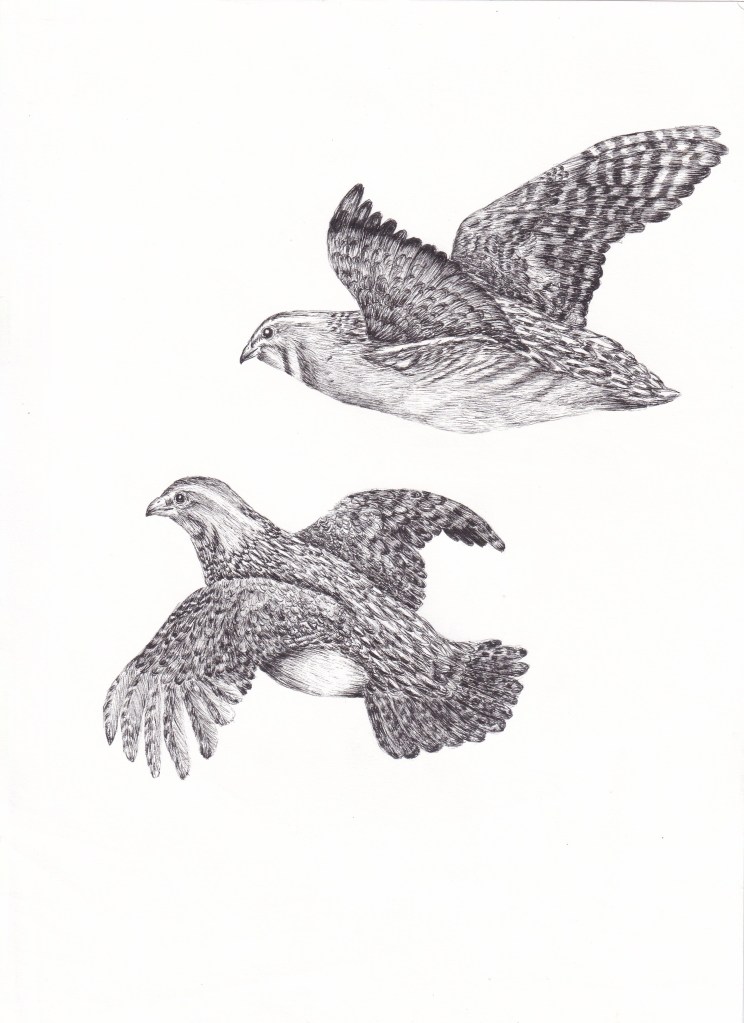
We are very much grateful to the PR team at Vetmeduni for helping us to communicate our work to broader audiences and contribute to our #OutreachMission #OpenScience Vetmeduni PR article (in German). A big thank goes to Zuzanna Zielinska who made the beautiful illustration of the flying male and female quail (above).

 Physiological ecology of life histories